
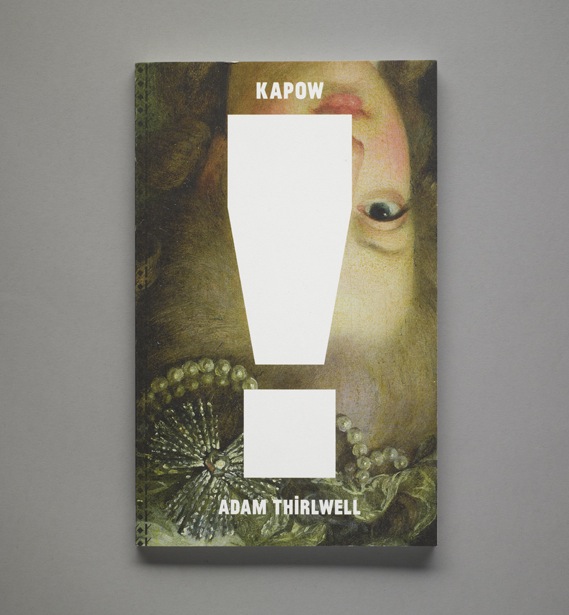
Adam thirlwell can definitely be considered as a contemporary writer. Only it is hard to try to determine to which movement he belongs. Indeed each of his novel is different. For example, his last novel Kapow! Is considered as a metamodern book. His book goes far beyond post modernism aspects.
Metamodernism is a set of developments in philosophy, aesthetics, and culture which are emerging from and reacting to postmodernism. One definition characterizes metamodernism as mediations between aspects of both modernism and postmodernism. Metamodernism is similar to post-postmodernism. https://en.wikipedia.org/wiki/Metamodernism
But Politics is not a post-post-modernist book or an neo-modern or altermodern book. It is, I think, just a post-modern novel or, at least, a novel close to the post-modernism movement.
“Look, I could end the ending right here. And if I ended this here, it would be a very sad story. It would be the story of Nana’s loneliness. If I were nasty, then I would probably do that. But I am not nasty. I‘m nice. This whole book is nice. Niceness, I reckon, is what you have come to expect from me. So I will carry on.” Politics, p265
This book can be considered as a post-modern novel because of his subjectivity. The narrator who is also the author has the control over his characters. He’s an external narrator but he implicates himself in his story by making personal comments on the book itself or his characters or even his readers. He knows when the story begins and when it ends. The narrative is not plot driven, because the beginning is not the true beginning of the story, as the narrator tells us at the start of the reading and the ending is somehow an open ending (The reader can make his own interpretation of what will happen next) but this open ending is not really important and useful for the reader or the narrator because it has no interest in the main plot. Moreover the narrator is often benevolent but sometime he can use irony and cynicism.
This particular style of narration uses metafiction, another important aspect of post-modernism literature. The narrator has control on everything. He controls the life and the personality of all his characters (except when he speak about some historical persons like Hitler or Stalin) This story is a bit like a writer who creates a story. He implicates himself, makes his personal comments and asks some direct questions to the readers. He is breaking the fourth wall when he speaks directly to us.
Metafiction is a literary device used to self-consciously and systematically draw attention to a work's status as an artifact. It poses questions about the relationship between fiction and reality, usually using irony and self-reflection. https://en.wikipedia.org/wiki/Metafiction
This book contains a lot of intertextuality. The author uses a lot of allusions, quotations, plagiarisms. He compared his book or his characters to others books like Juliette by the Marquis de Sade or Therese philosophe by Jean-Baptiste de Boyer. Most of his quotation comes from French Philosophers or writers. The narrator also uses references to historical (and true) anecdotes from the USSR story concerning intellectual people trying to find a way to struggle against the Stalin’s communist government.
And one of the last but important aspects of the book is that the narrator writes this book as he wants. He does not express himself to please his readers.He writes because he thinks some situations or scenes are useful. For example at the end of the novel, he said that even if the readers are tired all the sex scenes, he will add one more sex scene because he thinks that is absolutely needed for his story, he is even sorry for us.
All these aspects are why, I think politics can be considered as a postmodern novel; It contains Subjectivity, a non-ordinary narrative style, frequent intertextuality, a lot of metafictional elements and even, sometime, a cynical tone. I think, that this kind of literature is mazing because it really depends on how, the reader will receive this art.